Workshop on inclusion in the workplace
As part of my Master's degree in UX/UI, I met Laure Dousset, a facilitation expert. During her course, we learned how to prepare and run a workshop. I chose to lead a workshop on inclusion, and specifically on the role of women. My workshop was designed to educate and raise awareness about inappropriate reactions and attitudes in the workplace.
Preparation
First, we received or created the context for the workshop, then defined the objectives. In my case, there were three: first, to allow participants to express their emotions about what had happened, and then to help them process and calm their emotions. Second, to provide legal training and information on how to respond (as a victim, witness, or other), and finally, to propose solutions to prevent this from happening again. Next, we determined the number of participants (and possibly the roles and genders for single-sex workshops), the materials needed, and the steps to be implemented before and after the workshop. Finally, the agenda is the document that will allow us to distribute the workshop activities and schedule their duration to establish a rhythm. It is important to include breaks.
Material
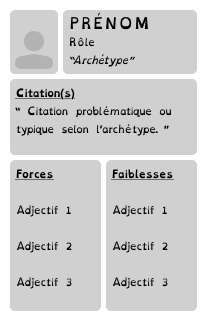
The workshop was initially planned to last a full day. However, as part of the course, each participant had to present their workshop, and we didn't have enough days for the number of students. We were then asked to choose one of the workshop activities. For this workshop, I chose the role-playing activity using "archetype" cards. The goal was to reverse the roles, for example, for a man to find himself in a female role, or an equivalent. The purpose of reversing the roles is to allow for an initial step back and a bit of empathy. All the roles are "problematic" or can lead to discrimination. And there are as many roles with responsibilities as there are employee/works council/etc. roles.
Process and feedback
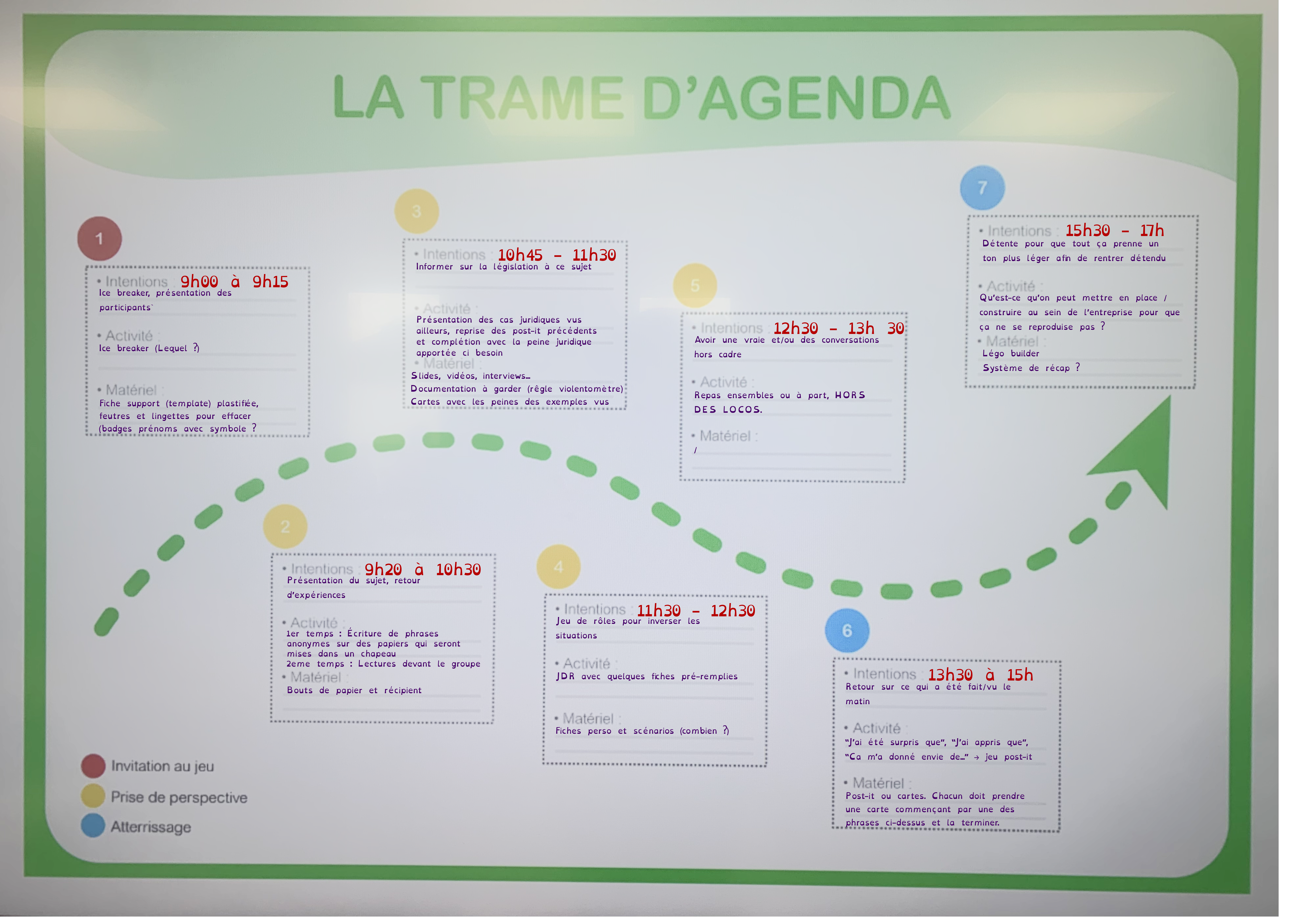
The workshop went very well. It's a very difficult game, yet everyone present got caught up in it. The exchange was quite short, about 5 minutes. The goal is simply to put yourself in someone else's shoes to trigger empathy, if possible. It's not about settling scores around the table. A short timeframe is therefore ideal for this. Some very interesting feedback was given, such as the need for an introduction to the game, specifying that it's difficult and features caricatured characters. I learned that a period of adjustment is necessary. In conclusion, I would be curious to lead this workshop in real-world conditions, and especially to test other activities planned for this workshop. But above all, I gained the entire process and knowledge to create and implement workshops in a corporate setting. Whether it's awareness workshops, ideation workshops, technical workshops to find solutions to specific problems, or anything else, this workshop remains flexible and adaptable to any situation, and I can create a customized workshop to meet your needs.