Onepoint - Creation of a comic strip to make a technical document more attractive.
As part of my Web Design Bachelor's degree apprenticeship at Onepoint, I had the pleasure of transforming two technical documents into comic strips. The goal was to make two essential but rarely read technical documents more engaging. The lack of reading resulted in back-and-forth communication between teams, whether for unnecessary discussions, corrections, or other issues. I'd never had any formal training in comic strip creation, so I did some research on the process. I didn't have time to do more in-depth research if I wanted to finish before the end of my contract. I had one month to transform the two documents.
Reading, proposal and synopsis
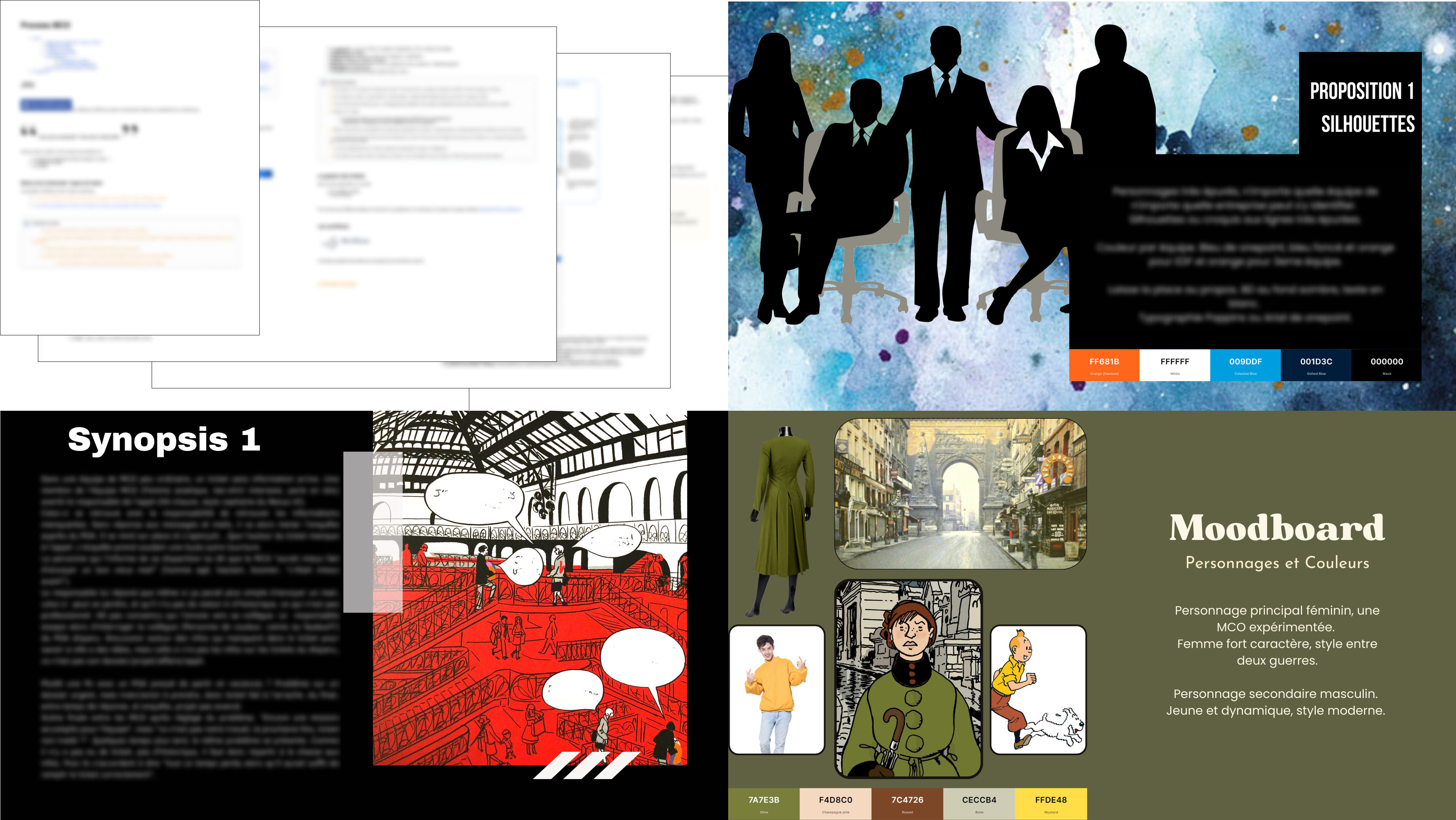
Initially, I began by reviewing the documents. It was complicated. The longest document contained terms, sentence structures, and lengthy passages that required explanation, which the document itself didn't provide. Therefore, some explanatory work was needed. Furthermore, the document was very dense. Aware of these difficulties, the technical team, who had written the document, asked for help. Once I understood the documents, I realized that one simply needed to be made more visually appealing, while the other could be developed in greater depth. I then made proposals (two proposals per document). These proposals included a mood board, suggestions for tone and main characters, as well as two synopses for the longer document.
Script, breakdown into speeches and placement
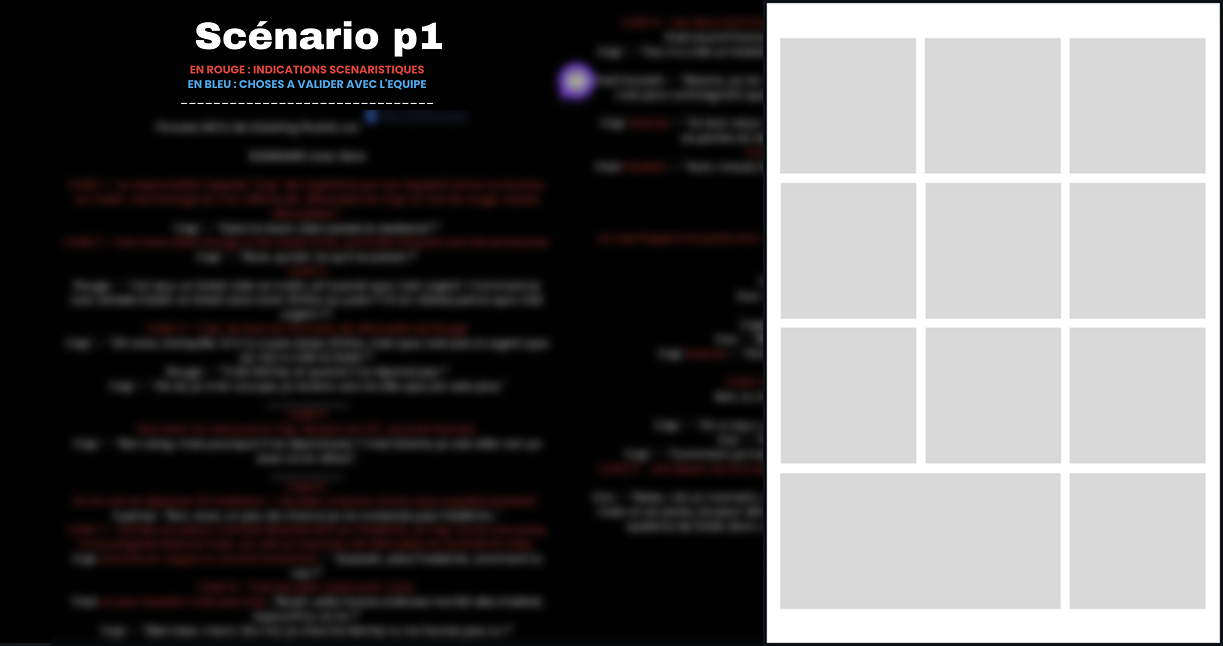
After selecting the tone, mood boards, and synopses, I developed the synopsis into a script. This script established the setting, context, and expressions for each line of dialogue. Approvals were obtained with the team, and then the layout work began (dividing the script's lines into panels).
First page and corrections
After this initial breakdown, I was able to begin the illustrations. Since one of the members of the technical team had a background in graphic design, I was able to submit the first page for his feedback. He gave me a lot of very interesting comments, such as the panels needing to be lighter in color, the proportions needing some adjustment, and especially the use of color. I had chosen to use one color per character, and to use it to highlight an important element. This colleague advised me to use it more consistently across the characters. I took these corrections into account for the rest of the project, but I realized that as the comic progressed, my graphic style was evolving. So I went back to the first page, which was quite different from the rest, to make the necessary adjustments.
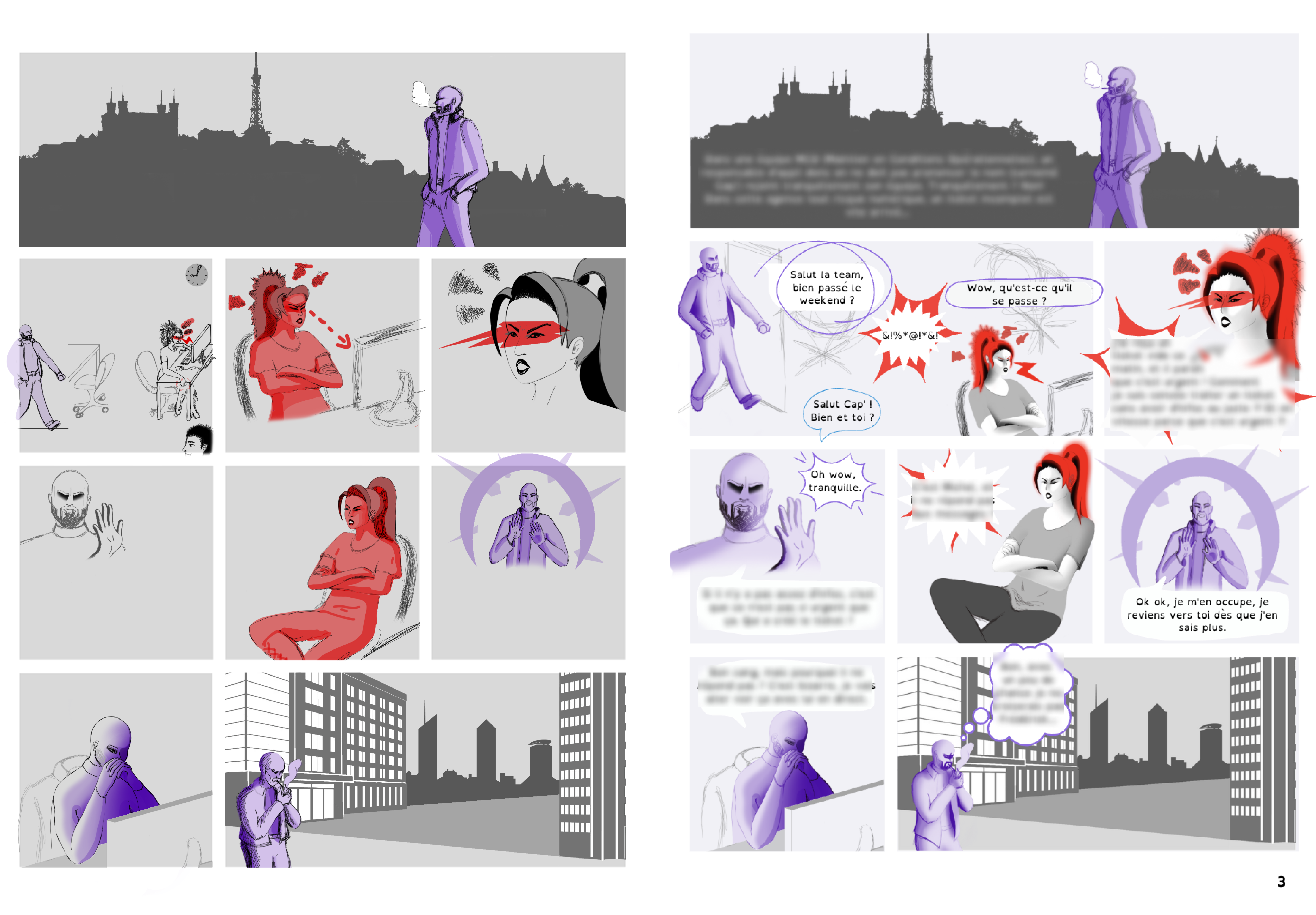
Illustration and documents
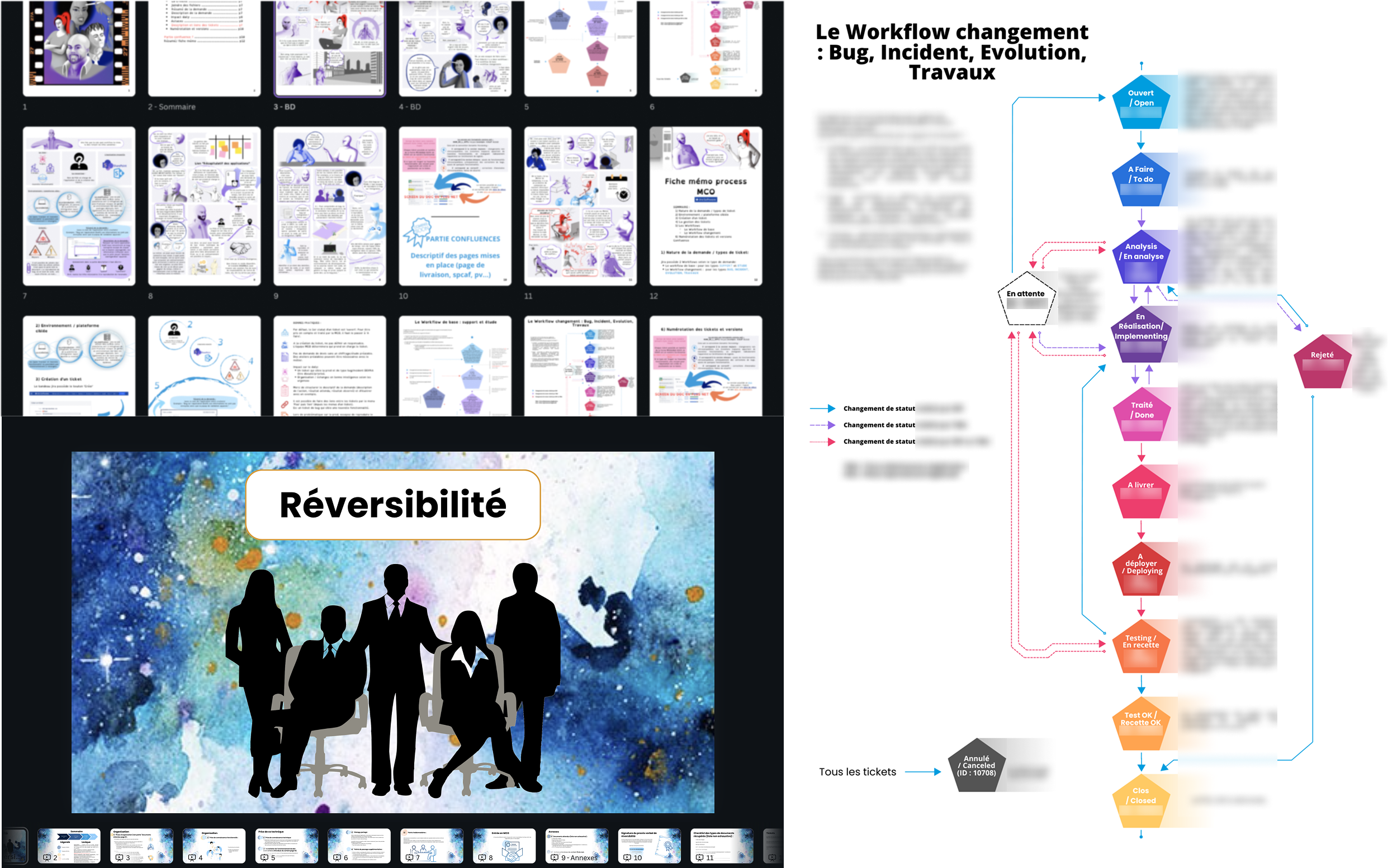
The illustration work continued as well as could be. I discovered my daily work rhythm: In the morning, I need to finish a task started the day before, while in the early afternoon, I need to start something new (in comic book terms, a new illustration).
The comic was therefore completed on time, with a total of 18 illustrated pages. A summary document was created, as was a second document. Finally, some graphics were created to simplify the process.
I thoroughly enjoyed this project. I don't know how many people have had the opportunity to create a comic as part of a non-publishing project, but I greatly appreciate having had this chance. I don't know if these documents are currently in use, but I hope that some of them at least helped facilitate the team's work.